LEGO Data Visualization
The LEGO Chrono-Spectrum River
Did you know LEGO has released over 200 colors since 1949, and each color comes with an official name and color code? Interestingly, these distinct hues encompass precise lifespans. Noticeably, The LEGO Group underwent a massive overhaul of its color palette and element strategy in 2004 - classic Light Gray, Dark Gray, and Brown were replaced with Light Bluish Gray, Dark Bluish Gray, and Reddish Brown.
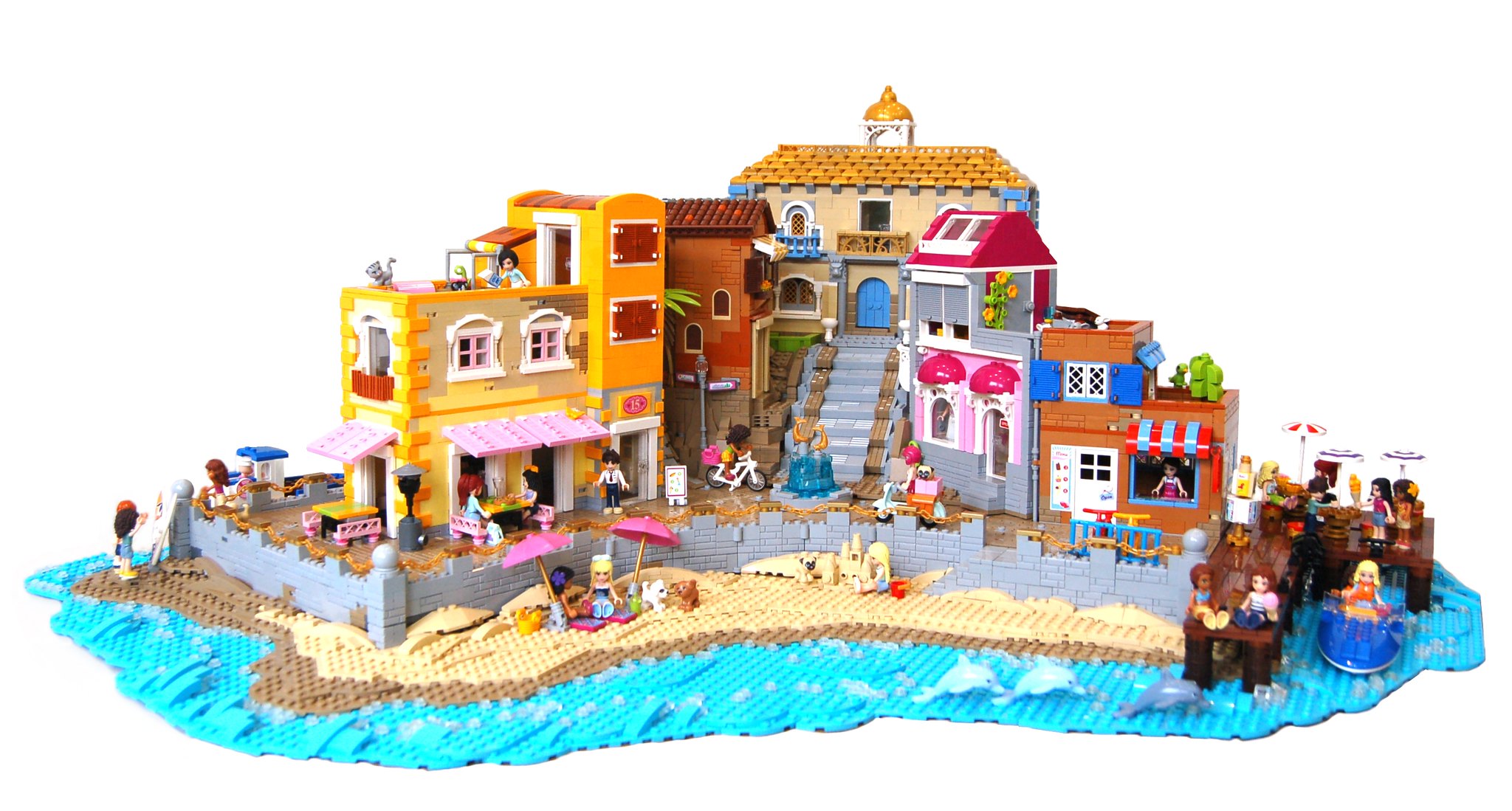
A custom LEGO scene with various colors
To illustrate the fluctuation of the color coverage over the years, let's look at the streamgraphs below, and you can see the distribution and tendency much more clearly than traditional charts! As a data visualization showcase, I leveraged the d3.js library for rendering in the frontend and categorize those LEGO colors using HSV classification algorithm. I sourced the color names and active years from official LEGO datasets and community records, using Python to further process and prepare the data for streamgraph visualization. Explore to see the technical ideas behind.
The amplitude of a particular color represents the proportion of LEGO bricks (there are many types of bricks like tile, window, wheel, dish...etc, and we call these parts) of that color. Let's start with the historical distribution of the 11 main color families.
Click the colored areas on the graph to see a summary of the color data over the years. When you click the area in a specific color, you can also search the parts and sets with that color.